Heat · tide · damp · building protection
Venice climate risk, home by home.
Regional climate data set the scene. A buying decision depends on the home’s exact height, possible water paths, systems, shared parts of the building, permissions, and insurance.
Official climate information
Venice is warming, but one yearly average cannot describe one home.
ISPRA’s 2026 report gives Venice Tessera average annual rainfall of 819 mm and an average temperature of 13.8°C for 1991–2020. The average was 14.5°C for 2015–2024, and 2024 was the weather station’s second-warmest year after 2014.
The airport station describes the wider area; it cannot predict comfort inside a top-floor Castello apartment, a shaded Cannaregio lower floor, a Lido house, or a modern Mestre building. The direction a home faces, its sun and wind exposure, walls and floors that hold heat, roof, windows, ventilation, cooling permissions, humidity, occupancy, and maintenance all affect how it feels.
Know the reference level and threshold
“High water” is a measured level, not one flood across the whole city.
Attention threshold
The Comune calls this the level, measured against the Punta Salute reference point, where attention begins.
About 5% of public land
This citywide percentage does not tell you whether water enters a particular home.
About 12% of public land
Routes, bridges, entrances, lower floors, and infrastructure can behave differently during the same event.
About 59% of public land
Even a broad city impact calls for checks of the building’s exact height and every way water could enter.
Comune di Venezia acqua-alta explanation.
A seller’s statement that a floor is “high” or “never floods” is not a survey. Ask an appropriate technician to measure the floor and doorway thresholds against the local reference level. Then compare those measurements with the entrance, courtyard, shared areas, systems, tide records, rainfall, drainage, past events, repairs, and insurance claims.
Past high tides and MOSE
Past lagoon levels do not predict whether water will enter one home.
| Recorded level | Cases | Historical average |
|---|---|---|
| At least 110 cm | 290 | 5.2 per year |
| At least 120 cm | 122 | 2.2 per year |
| At least 130 cm | 49 | 1.1 per year |
| At least 140 cm | 22 | About once every 2.5 years |
The City says MOSE has operated since December 2020. During a barrier closure, monitoring can record a high sea level offshore while the protected lagoon and city experience a different level. These historical numbers therefore do not show today’s yearly chance of water entering a home.
MOSE also cannot solve every source of water damage. Heavy rain, poor drainage, groundwater, moisture rising through masonry, salt, wave action, leaks, neglected shared parts of the building, and low-placed systems all need separate checks.
The home and shared building
Inspect water risks from the canal edge to the electrical panel.
- Height and entrancesMeasure the home, street, water door, courtyard, thresholds, storage, meters, and shared routes against the local height reference. Identify every possible way water could enter.
- Damp and saltsLook for tide marks, white salt deposits, blistering, crumbling plaster or masonry, hidden finishes, musty odor, mold, corrosion, timber decay, repeated repainting, and poor ventilation. Use an independent specialist in moisture and building materials.
- SystemsRecord the height and protection of electrics, boiler, HVAC, pumps, non-return valves, alarms, tanks, telecom, lifts, fire systems, and any equipment serving shared areas.
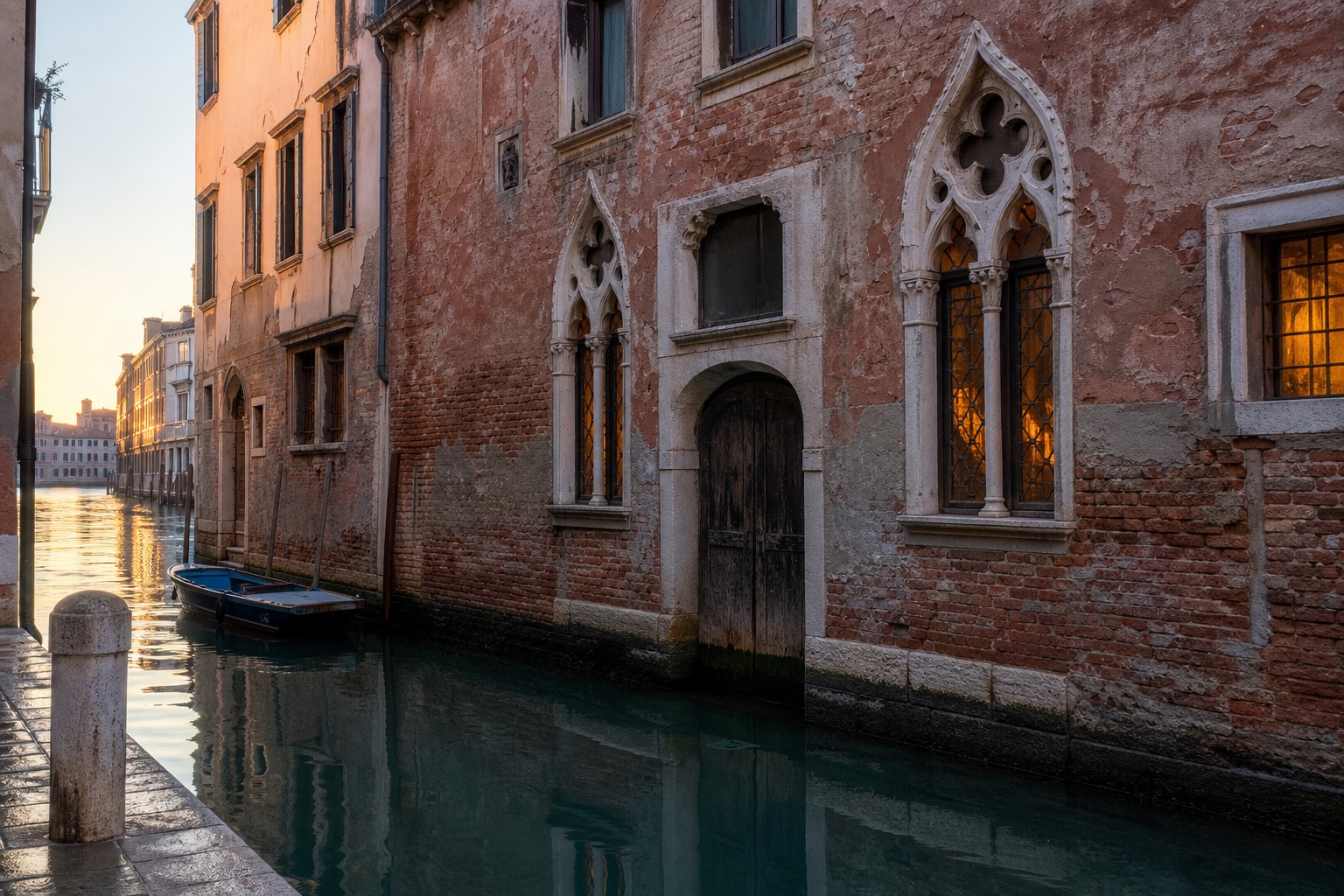
- Canal and wave exposureReview the water gate, canal wall, foundations, nearby public works, settling or cracks, boat wash, mooring, past repairs, permits, and who must pay for future work.
- Condominium recordsRead meeting minutes, engineer reports, maintenance plans, reserve funds, unpaid fees, insurance claims, approved major works, disputes, and cost-sharing rules for the roof, façade, foundation, canal edge, drains, and shared systems.
- Permitted changesConfirm that barriers, pumps, raised systems, replacement windows, outdoor cooling units, roof work, waterproofing, drainage, and past changes have—or can receive—the needed planning, landscape, heritage, and condominium approvals.
UNESCO identifies high water and waves from motorboats as risks to Venice’s buildings and streets. The municipality separately handles landscape permissions under Italy’s cultural-heritage rules.
UNESCO Venice and its Lagoon · Comune landscape authorizations.
Get the terms before you commit
“Home insured” does not mean acqua alta is covered.
IVASS’s review says disaster protection is often an extra part of a home policy with an added premium. Definitions and exclusions for floods, inundation, flash rain, and other water events vary. A condominium policy may protect shared interests without covering the owner’s interior, belongings, temporary housing, lost rent, equipment, or liability.
Give the insurer the exact address, floor and height, occupancy, vacancy periods, use, rental activity, past events and claims, construction, protected status, work done, security, belongings, and shared-building insurance. Ask the insurer or authorized intermediary to explain what is covered, definitions, exclusions, waiting periods, maximum payments, deductibles, maintenance duties, protective steps, how value is calculated, and documents needed for a claim.
Do not rely on a seller, agent, building administrator, or guide to explain coverage. If insurance matters to the purchase, confirm that suitable coverage is available before signing and get advice on any contract condition.
Summer and year-round comfort
Water is not the only climate cost.
Heat and cooling
Test top-floor and west-facing rooms in hot weather. Confirm electrical capacity, existing systems, where condensation drains, permission for an outdoor unit, noise, maintenance access, and energy cost.
Humidity and ventilation
Inspect bathrooms, kitchens, wardrobes, lower walls, closed rooms, and conditions after the home has been empty. Understand how windows, shutters, mechanical ventilation, and dehumidifiers can legally operate.
Wind and salt
Lido, exposed lagoon edges, roofs, shutters, metalwork, façades, equipment, and windows can face more wind-driven rain and salt than a sheltered canal interior.
Winter comfort
Review the heating system, fuel and meters, insulation limits, drafts, condensation, sunlight, how often the home will be occupied, annual bills, maintenance, and condominium rules.
Hire an independent technical inspector with experience in the home’s age, materials, location, and intended use. Energy documents are useful, but they do not replace a physical inspection or an estimate of running costs.
Frequently asked questions
Citywide tide facts do not tell you what will happen in one home.
What tide level counts as acqua alta?
The Comune uses +80 cm on the Punta Salute reference as an attention threshold. Its estimates for affected public land are about 5% at 100 cm, 12% at 110 cm, and 59% at 140 cm.
Does MOSE eliminate flood risk?
No. MOSE changes lagoon water levels during qualifying events but does not replace checks of the home’s exact height, possible water entry, rainfall, damp, systems, shared building areas, maintenance, and insurance.
Does ordinary home insurance cover acqua alta?
Do not assume it does. Definitions, exclusions, limits, deductibles, optional cover, disclosure duties, and property facts vary. Get a written quote and an explanation from an authorized insurance professional before committing.
Should Americans avoid every ground-floor home?
A blanket rule cannot replace checks on the specific home. Lower floors can face greater water and damp exposure, so the measured height, flood history, physical condition, systems, permissions, and insurance deserve extra attention.
Sources and limits
Official information, with clear limits for a specific home.
- 01
- 02Comune di Venezia
Acqua-alta levels and affected public land and historical tide frequency.
- 03
- 04
- 05Comune di Venezia planning
Sources reviewed July 17, 2026. Tide operations, climate data, rules, building condition, and insurance products change.
This guide is not a flood model, height certificate, engineering or survey finding, environmental review, weather forecast, insurance interpretation, or property recommendation. Hire independent technicians and authorized insurance professionals for the exact home.