Historic center · Lido · Mestre
Choose the ordinary week, not the postcard.
Venice’s center, beach island, and mainland solve different household problems. Compare the routes, constraints, and carrying burden behind each address.
Start with the use case
“Venice” can mean three very different home lives.
The historic center turns walking, bridges, and boats into the transportation system. The Lido adds roads, bicycles, beaches, and ferry links. Mestre and the mainland restore familiar cars, trains, buses, larger housing choices, and lower asking-price levels.
Map a normal school or work morning, groceries, deliveries, healthcare, airport or rail access, guests with luggage, late-night return, and an emergency route. A location that is magical on Saturday may be costly or exhausting on an ordinary Tuesday.
At-a-glance comparison
See the main differences side by side.
| Question | Historic Venice | Lido | Mestre / mainland |
|---|---|---|---|
| Getting around | Walking, bridges, vaporetto, water taxi | Walking, bicycles, cars, vaporetto, vehicle ferry | Cars, buses, trams, rail, bicycles |
| Housing prices | Highest property-portal figures and OMI ranges of the three | Below the prime center, above much of the mainland | Much lower broad price figures |
| Space and elevator access | Depends greatly on the property; historic stairs are common | Broader mix of apartments and houses | More familiar building types and often larger homes |
| Water checks | Essential, especially for lower floors and shared parts of the building | Still essential; island and coastal exposure differ | Drainage and flood checks still depend on the address |
| School planning | A water-transit leg may come before the mainland campus commute | Ferry or vaporetto can shape campus choice | Simplest access to many Mestre and regional campuses |
| Visitor activity | Varies sharply by neighborhood and route | Seasonal beach and event patterns | Generally less tourism; areas near the station are busier |
Price comparison: June 2026 property-portal figures included €5,403/m² for Idealista’s Venice and Giudecca area, €4,122/m² for Immobiliare.it’s Lido page, and €1,999/m² for Idealista’s Mestre area. These are asking-price figures from different publishers and geographic areas, not comparable sale-price averages. See the full data notes.
Historic center
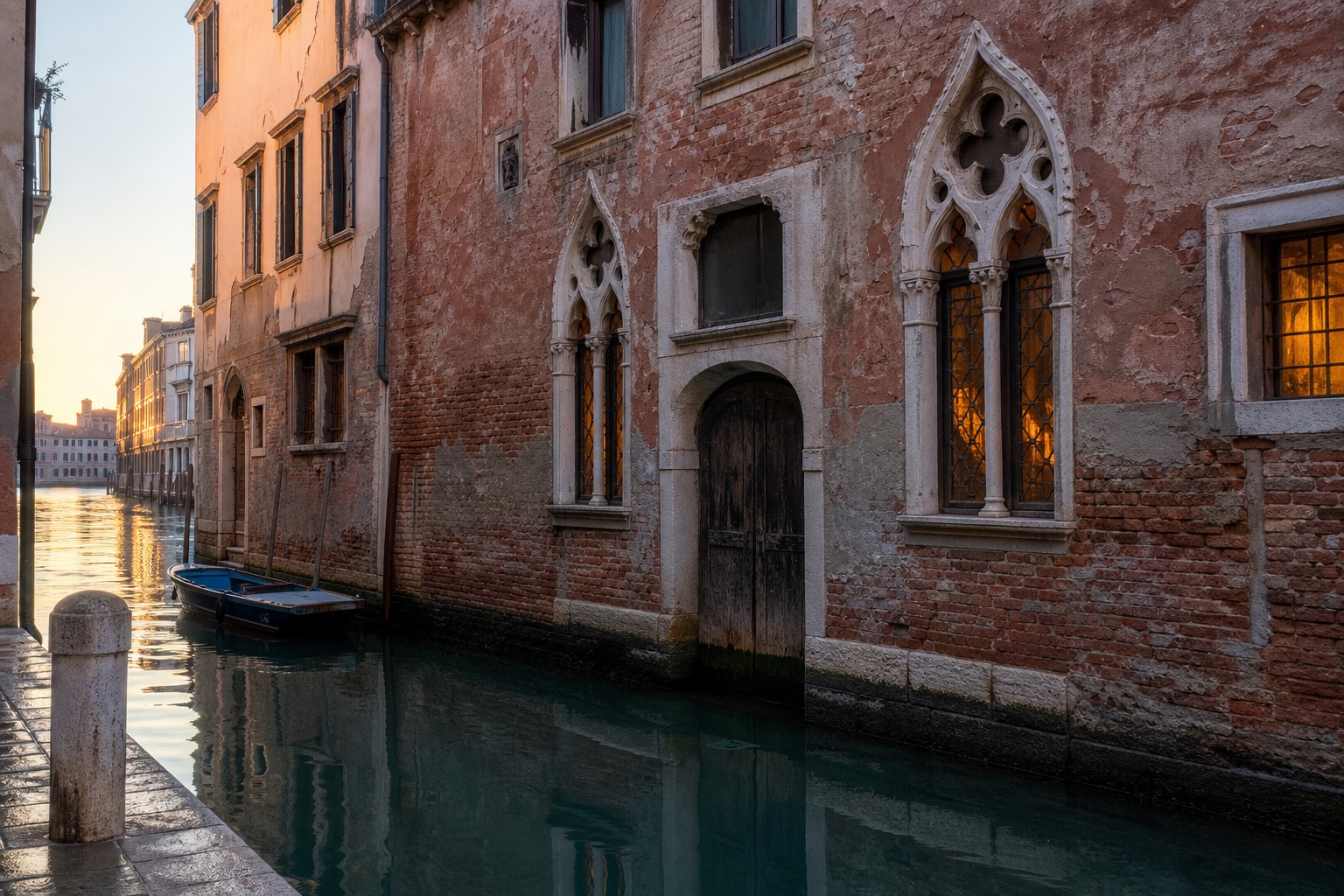
In historic Venice, the exact route matters enormously.
San Marco, San Polo, Dorsoduro, Cannaregio, Castello, and Santa Croce are not interchangeable. A home near Rialto or a major visitor route has a different sound and crowd cycle from a quieter edge of Castello, Cannaregio, or Dorsoduro. Bridge count, vaporetto stop, grocery options, night lighting, waste point, cargo landing, and the path to Piazzale Roma can be more useful search criteria than a neighborhood label alone.
Why choose it
Architectural character, walkability, culture, water transit, limited residential supply, and the ability to live without a car.
What to budget for
Boat or porter moves, stairs, delivery surcharges, protected-building permissions, damp and water work, restoration of shared building parts, cooling, waste logistics, and time.
What to inspect
Finished-floor elevation, water and salt records, systems, roof and facades, canal-edge structures, drainage, legal use, past alterations, condominium records, and insurance terms.
What to revisit
The street and vaporetto route at school or work time, late evening, peak visitor time, rain, and—with official warnings and safe conditions—an elevated tide.
The City explains that vehicles terminate at Piazzale Roma or Tronchetto, after which travelers continue by water or on foot.
Lido di Venezia
An island compromise: beach, bicycles, cars, and a timetable.
The Lido can suit households seeking calmer streets, outdoor routines, and ordinary vehicle use without giving up a lagoon address. The choice remains route-led: compare walking or cycling distance to vaporetto stops, vehicle-ferry timing, school connections, winter services, summer visitor pressure, and the home’s exposure to wind, salt, and water.
Vehicle access is a genuine distinction. ACTV Line 17 operates a ferry-boat service between Tronchetto and the Lido, subject to schedules, capacity, fares, and operating changes. A car therefore expands local mobility but does not erase the island crossing. Test the earliest and latest journeys required by work, airport trips, school events, and healthcare.
Mestre and mainland districts
Lower entry prices and familiar logistics—without one uniform mainland market.
Mestre can simplify airport, motorway, rail, school, healthcare, renovation, deliveries, and car use. Central Mestre, Carpenedo, Favaro Veneto, Marghera, Chirignago, and other mainland areas differ in street design, services, transit, proximity to industry, green space, and activity at night. “Mestre” should begin a search, not finish the location analysis.
The mainland is often practical for families using the International School of Venice in Mestre or an international campus near the airport and Treviso area. It can also suit frequent travelers or buyers who want a larger home and conventional maintenance access. The difference is that daily life connects to historic Venice by train, tram, bus, or car gateway rather than beginning immediately in the lagoon city.
At any candidate address, inspect traffic and rail noise, air quality and proximity to industry, drainage, parking rights, evening activity, walking routes to transit, condominium condition, and the actual time—not merely map distance—to Venice Santa Lucia, Piazzale Roma, school, work, and the airport.
Venezia Unica provides an official overview of public transport around Venice.
A location decision file
Score the route and building—not the district’s reputation.
- Fix non-negotiable destinations
Map school, work, caregiving, airport, rail, healthcare, groceries, and social routines at the days and hours they actually occur.
- Count the full daily cost
Add transit passes, parking, ferry or boat use, delivery and move costs, stairs, renovation access, travel time, insurance, extraordinary common works, and seasonal operating needs.
- Rent before buying where uncertainty is high
A short lawful rental can reveal winter light, summer heat, crowd cycles, water routes, household tolerance for bridges, and mainland dependencies that a viewing cannot.
- Keep backups
For schools, work routes, vaporetto interruptions, mobility changes, and major building works, identify an alternative before making the preferred route a purchase assumption.
Frequently asked questions
Location questions Americans ask first.
Can residents keep a car in historic Venice?
Historic Venice has no conventional road network. Cars remain at mainland facilities or Piazzale Roma and Tronchetto gateways. The Lido and Mestre allow ordinary vehicle use.
Is Mestre much cheaper than historic Venice?
Broad asking indicators and OMI bands show a large gap, but sources, boundaries, and property mix differ. Use the spread to frame a search, not to price a home.
Is the Lido practical for an American family?
It can be, especially for households prioritizing bicycles, beach, vehicles, and a calmer island routine—if school, work, ferry, healthcare, and late-night routes are tested.
Which Venice area is safest?
No current comparable official neighborhood dataset supports a universal ranking. Combine official metropolitan context with repeat route, block, entrance, lighting, and building-security checks.
Sources and limits
Plan from official transport facts and dated market context.
- 01Comune di Venezia
- 02
- 03Venezia Unica
- 04Market publishers
Idealista Venice and Giudecca, Idealista Mestre, and Immobiliare.it Lido.
Sources reviewed July 17, 2026. Routes, schedules, fares, prices, school capacity, municipal rules, and property facts change.
This guide does not rank or recommend a neighborhood, property, school, or transport route. It is not a valuation, safety determination, engineering conclusion, flood assessment, insurance advice, or accessibility guarantee. Test each address and obtain independent professional review.