Climate and comfort · U.S. buyer guide
Milan climate and weather for homebuyers
Annual averages hide the property questions that shape comfort: summer night heat, shade, cooling permissions, winter systems, heavy-rain paths, and the exposure of a particular floor and façade.
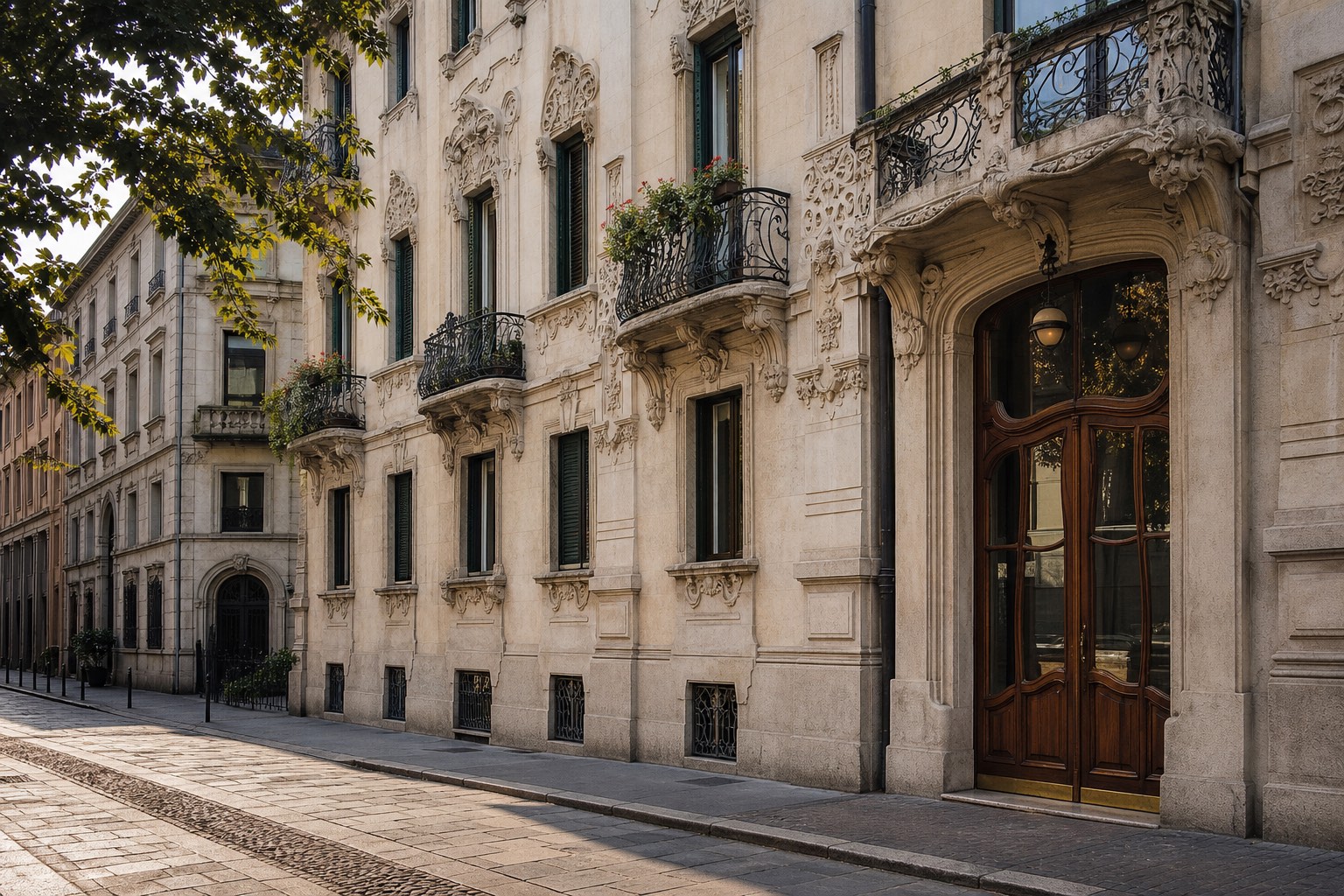
Milan has a warming urban climate, meaningful summer nighttime heat, and nearly a meter of average annual precipitation at the Brera reference station. A buyer should translate those city signals into building-specific questions before committing.
Four high-value checks
Verify how the home sheds heat at night, whether effective cooling can lawfully be installed and operated, how water reaches and leaves the property, and what the condominium records reveal about roofs, façades, drainage, heating, and planned works.
Climate normals describe a long period at a monitoring location. They are not an indoor-temperature promise, flood certificate, or prediction for a future year. Microclimate, urban form, equipment, maintenance, and household use all matter.
Measured context
What the official climate record says.
1991–2020 annual mean temperature
ISPRA reports this normal for Milano Brera, a long-running urban observation point.
1991–2020 annual precipitation
The same ISPRA reference reports the annual precipitation normal at Milano Brera.
2015–2024 annual mean temperature
ISPRA’s more recent ten-year mean at the station is warmer than the 1991–2020 normal.
Source: ISPRA, climate indicators for regional capitals, Report 103/2026. Station measurements should not be treated as identical to every Milan address.
| Climate signal | Property exposure | What to verify |
|---|---|---|
| Hot days and warm nights | Top floors, west-facing glazing, deep courtyards, limited cross-ventilation. | Shade, window performance, cooling capacity, exterior-unit permissions, roof insulation, nighttime airflow. |
| Heavy rain | Ground and basement rooms, garages, cellars, lowered entrances, roof and terrace drains. | Official hazard maps, drainage paths, prior water events, insurance context, maintenance, pumps and backflow protection where applicable. |
| Cold and damp periods | Uninsulated façades, thermal bridges, older windows, north-facing rooms, intermittent occupancy. | Heating system, controls, costs, ventilation, moisture history, façade and roof condition. |
| Urban heat island | Hard-surfaced blocks with limited trees or nighttime cooling. | Tree and courtyard shade, surrounding surfaces, airflow, nearby heat sources, future street or construction plans. |
Summer performance
Nighttime cooling is now a central housing question.
Comune di Milano’s 2025 local climate profile reports an average of about 36 tropical nights per year in 1971–2000 and 68 per year in 2001–2025. The report identifies 101 tropical nights in 2022, including 47 consecutive nights. In this context, a tropical night is one whose minimum temperature remains above 20°C.
An annual mean does not describe bedroom comfort
A property can have an acceptable energy certificate and still be difficult to cool in a specific room. Ask a technical professional to assess solar gain, insulation, glazing, shading, roof and wall exposure, ventilation, system sizing, lawful installation, and condominium restrictions.
Passive performance
- Which rooms receive afternoon sun, and for how long?
- Can air move between opposite façades, or is the apartment single-aspect?
- Are shutters, blinds, awnings, trees, loggias, or deep reveals effective and serviceable?
- Is the home directly below a roof or beside a heat-retaining terrace?
Mechanical cooling
- What equipment exists, who owns it, and which rooms does it serve?
- Where do condensers and drains sit, and were approvals obtained?
- Do façade, heritage, noise, or condominium rules limit new equipment?
- Are electrical capacity, maintenance records, and replacement access adequate?
Read Comune di Milano’s 2025 Local Climate Profile. The City also describes an urban heat-island effect of roughly 2°C relative to rural surroundings in its urban cooling program overview.
Rain and water paths
Start with official maps; finish at the threshold.
The City’s planning materials identify areas of hydraulic hazard, but a mapped zone is only one layer. The exact elevation of a threshold, slope of a garage ramp, condition of a roof outlet, capacity of a drain, shared-building maintenance, and past events can change property-level exposure.
- Locate the exact parcel and access points.Use the official mapping with a qualified technical professional; do not infer from a neighborhood name.
- Trace water physically.Inspect street and courtyard levels, lowered entries, ramps, cellar vents, terraces, balconies, flat roofs, gutters, downpipes, drains, and overflow routes.
- Read the building record.Review condominium minutes, maintenance, claims, invoices, approved works, and seller disclosures for water entry, seepage, roof, drainage, pumps, and remediation.
- Check insurability and responsibility.Ask an independent insurance professional about available cover, exclusions, deductibles, required protections, and the boundary between private and condominium responsibility.
Official planning source: Comune di Milano, detailed hydraulic analysis and downloadable data. Map categories require professional interpretation and do not guarantee that a property will or will not experience water damage.
Whole-year ownership
Inspect systems, fabric, and operating rules together.
Heating
Identify whether the system is centralized or autonomous, what is included in condominium charges, how use is metered and controlled, its age and maintenance history, and whether approved replacement works are planned.
Windows and ventilation
Check operation, seals, glazing, shutters, drafts, condensation signs, acoustic performance, and how occupants ventilate without creating persistent moisture.
Thermal bridges and surfaces
Look behind furniture and at external corners, window reveals, ceilings below roofs or terraces, and walls beside unheated spaces. Have suspicious staining or repair histories independently assessed.
Intermittent use
For a part-time home, plan safe temperature and humidity management, remote monitoring if appropriate, water shutoff, caretaker access, insurance conditions, and emergency responsibility.
An Attestato di Prestazione Energetica (APE) is a required transaction document and useful input, but it should be reviewed alongside actual systems, bills where available, physical inspection, intended use, and a technical professional’s advice.
Property fieldwork
View for the season you cannot see.
- At midday: Which rooms receive direct sun, and do exterior shades work?
- In the evening: Has stored heat cleared, and can bedrooms ventilate without unacceptable noise?
- After rain if possible: Are drains clear, surfaces dry, cellar air normal, and roof or façade repairs visible?
- With windows closed and open: Compare temperature, air movement, traffic, courtyard, mechanical, restaurant, rail, and delivery noise.
- In documents: Match installed heating, cooling, windows, verandas, terraces, and service equipment to approvals, plans, ownership, and condominium rules.
- In the budget: Include operation, maintenance, approved major works, possible upgrades, professional design, permissions, and reinstatement risk.
Use independent technical checks
A seller, broker, energy certificate, map, or one viewing cannot tell you how comfortable a home will be in future weather. Before making a binding commitment, hire the right technical, legal, notarial, insurance, and condominium professionals.
Primary sources
Sources used in this guide
- ISPRA — climate indicators for regional capitals (2026)Milano Brera temperature and precipitation normals and recent mean.
- Comune di Milano — Local Climate Profile 2025Tropical-night and heat-wave context.
- Comune di Milano — urban cooling and heat islandCity heat-island context and adaptation program.
- Comune di Milano — detailed hydraulic analysisOfficial planning source for water-risk checks at a specific location.
- ARPA Lombardia — Milano Brera stationBackground on the long-running urban observation station.
Sources were last checked July 17, 2026. Climate normals, hazard maps, building conditions, rules, and equipment change. Verify current official data and obtain property-specific professional assessment.
A home that works through the year
Plan for heat, rain, and everyday comfort.
NOTICE Milan coordinates climate, building, condominium, and document questions with the independent professionals responsible for evaluating them.
Discuss your Milan purchase