Location checks · U.S. buyer guide
Milan safety and crime: read the data carefully
Reported-offense totals identify citywide patterns; they do not rank every neighborhood or predict an individual household’s experience. Pair official data with repeat visits and building-level checks.
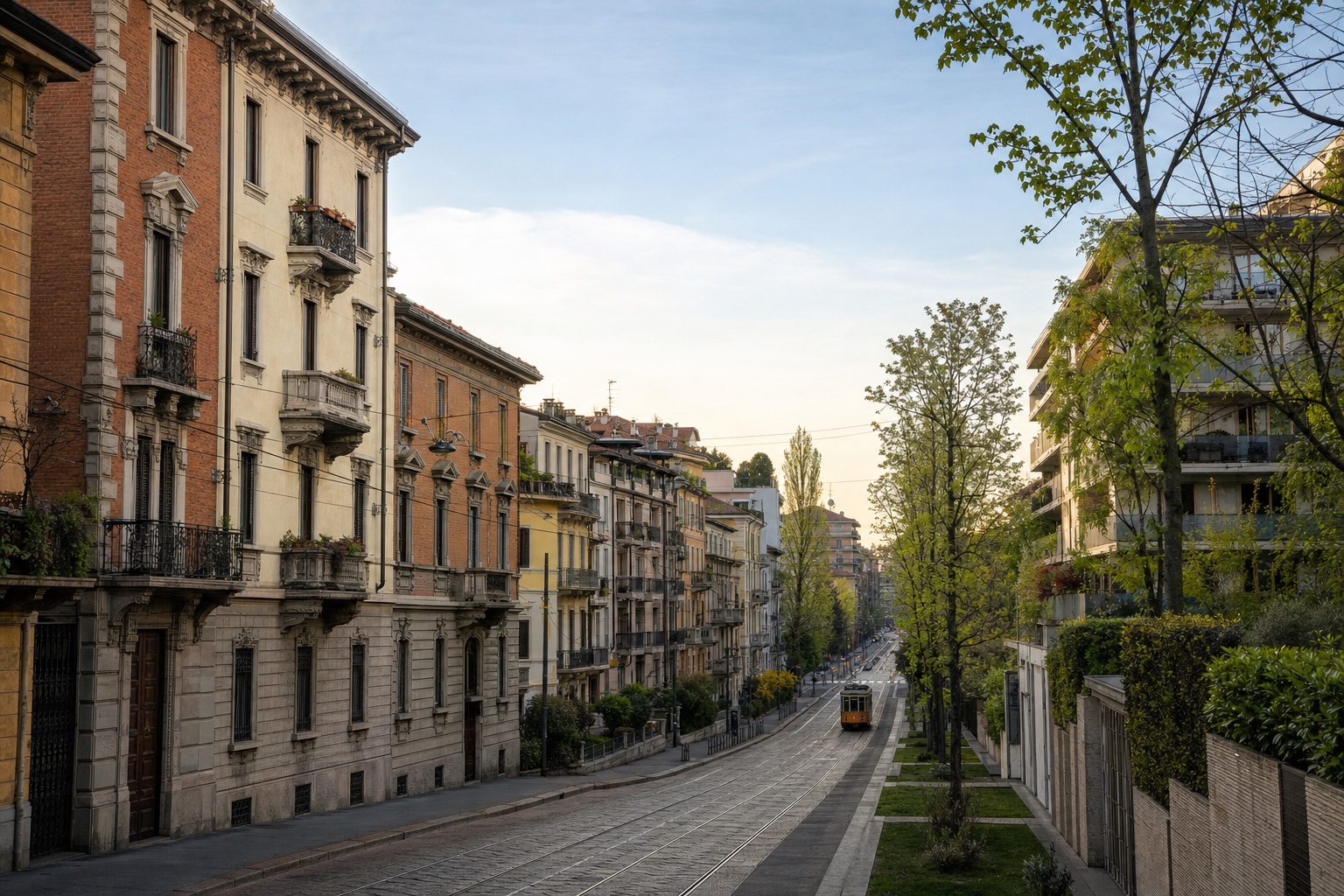
Milan’s high reported-crime rate deserves context, not dismissal. Theft and robbery are visible in the official data, while totals are also affected by a resident-based denominator in a city used daily by large numbers of commuters and visitors.
Use three types of information
Read the same geography and year in official data; identify which offense categories drive the total; then test the exact building and routes at the times your household will use them.
Police-reported offenses measure events recorded by authorities. They do not equal all victimization, perceived safety, violent-crime probability, or a forecast for one address. Differences in reporting behavior, enforcement, foot traffic, tourism, and data boundaries matter.
Three official signals
Keep the period, geography, and measure attached.
Reported offenses per 100,000 registered residents
ISTAT reports this 2024 indicator for the Comune di Milano. It is a total reported-offense rate—not a violent-crime rate or neighborhood average.
ISTAT Goal 11 report, 2026 →City reported-crime comparison
In a 2025 update, Italy’s Interior Ministry said reported crime in the City of Milan was down 8% against the comparable 2024 period; the metropolitan territory was down 7%.
Interior Ministry update →Category-level metropolitan comparison
The Metropolitan City’s BES report provides category rates that show how theft-related offenses can drive a headline total. This is a wider geography and older year than the ISTAT city figure.
Metropolitan Milan BES 2024 →Selected 2022 police-reported rates
| Offense category | Metropolitan Milan | Italy | Unit |
|---|---|---|---|
| Homicide | 0.6 | 0.6 | Per 100,000 residents |
| Robbery | 128.0 | 43.5 | Per 100,000 residents |
| Pickpocketing | 1,029.5 | 219.1 | Per 100,000 residents |
| Fraud and computer fraud | 621.8 | 464.1 | Per 100,000 residents |
| Sexual violence | 18.2 | 10.7 | Per 100,000 residents |
Source: BES of Metropolitan Milan 2024, reporting 2022 data. These figures describe recorded offenses across the metropolitan geography and should not be applied to a district, block, or individual probability.
A declining period and a high annual rate can both be true
The 2025 Interior Ministry update compared a specified period with the prior year. The ISTAT figure is a full-year 2024 city rate. They answer different questions and should not be combined into a synthetic “safety score.”
Interpretation
Five limits a buyer should keep visible.
- Reported does not mean all crime.Some incidents are more likely to be reported than others. Administrative data are not the same as a victimization survey.
- The denominator is registered residents.Commuters, tourists, students, business visitors, and event traffic can contribute incidents without appearing in the resident denominator.
- Geographies differ.Comune di Milano, Metropolitan City of Milan, police districts, and colloquial neighborhoods are not equivalent boundaries.
- Categories differ in lived impact.A total count can be driven by frequent property offenses; it should not be described as a violent-crime rate.
- Time changes exposure.A transit interchange at rush hour, a residential block overnight, and an entertainment street late evening present different conditions.
No “safest neighborhood” list
Broad rankings create false precision.
NOTICE Milan does not publish a safest-to-least-safe neighborhood ranking because we have not identified a current official, comparable, district-level dataset that supports one. Third-party perceptions, crowd-sourced scores, media counts, and citywide totals should not be presented as if they were consistent rates for each neighborhood.
What an area label can do
It can help organize a search, identify transport and service patterns, and frame questions for local authorities and professionals.
What it cannot do
It cannot establish the condition of a particular entrance, garage, courtyard, transit walk, school route, or building-management practice.
When a local broker, seller, or resident says an area is “safe,” ask what they mean, what time period they know, and whether they are describing the specific block. Treat the answer as perspective, not independent verification.
Address-level fieldwork
Inspect the route as carefully as the rooms.
Building perimeter and entry
Observe sightlines, door and gate closure, key or access-control practices, lighting, intercom, parcel handling, garage access, cellar paths, scaffolding, and whether entrances are shared with commercial activity.
Common areas
Ask how access credentials are managed, whether there is a concierge and at what hours, where bicycles and deliveries are kept, and whether condominium minutes record recurring security concerns or approved works.
Daily routes
Walk to transit, school, parking, and evening destinations at the times you will use them. Note crossings, visibility, open businesses, crowding, construction, and the alternative route after a missed connection.
Repeat observations
Return on a weekday morning, evening, and weekend. Weather, school arrival, nightlife, market days, stadium or event traffic, and seasonal darkness can greatly change how the block feels.
Before committing
Record answers that can be checked.
- To the condominium administrator: What access, theft, damage, or recurring nuisance issues appear in recent minutes, accounts, insurance history, or approved works?
- To the technical adviser: Are entrance, shutters, doors, windows, garage, cellar, and alarm equipment lawful, serviceable, and included as represented?
- To the seller or broker: Which statements about security are facts in documents, and which are personal opinion?
- To yourself: Does every household member feel able to complete the ordinary route at the actual time, including the final walk?
- To local authorities where appropriate: Are there current, location-specific public-safety resources or reporting channels relevant to this address?
Keep safety clauses professional
If a security condition is essential to the purchase, ask the buyer’s notary, lawyer, technical professional, and insurer how to verify it and address it in the transaction. NOTICE can coordinate the question but does not give legal, engineering, insurance, or personal-security advice.
Primary sources
Sources used in this guide
- ISTAT — Sustainable Development Goals, Goal 11 (2026)2024 Comune di Milano reported-offense indicator and methodological context.
- Italian Interior Ministry — Milan legality and security updateComparative 2025 city and metropolitan trend figures.
- Città Metropolitana di Milano — BES 2024Selected 2022 offense-category rates for the metropolitan territory and Italy.
Sources were last checked July 17, 2026. Police-reported statistics are revised and released on different schedules. Confirm the latest publication, geography, measure, and period before relying on any figure.
A well-documented buying process
Bring the building, block, and daily routes into your buying plan.
NOTICE Milan helps U.S. buyers turn personal location concerns into questions, on-site checks, records, and clear follow-up with professionals.
Discuss your Milan purchase