Where to live · Florence
Central Florence or the wider city?
Compare the ordinary week—not the vacation week—across historic streets, residential neighborhoods, tram routes, southern hills, and nearby municipalities.
Begin with routes
“Best neighborhood” is the wrong first question.
Start with the school gate, workplace, airport or rail pattern, mobility needs, evening route, outdoor-space requirement, parking tolerance, heat comfort, flood exposure, and housing type. Then draw the map. A famous address can be a poor fit; a less romantic quarter can make the household work.
Time the actual commute
Test door-to-door at school and work hours, including the walk, transfer, parking, and last leg.
View the street twice
Day and evening reveal tourist flow, deliveries, nightlife, traffic, lighting, event noise, and the building entrance.
Inspect the building type
Lift, stairs, cooling, exposure, storage, roof, facade, parking, shutters, windows, and condominium works matter as much as district.
Check the municipality
Fiesole, Bagno a Ripoli, and Scandicci are separate administrations, with their own school, tax, permit, and service processes.
Six location patterns
What each part of the Florence map gives—and asks in return.
Historic center and Oltrarno
Gives: exceptional walkability, culture, restaurants, rail access, architectural character. Asks: the highest broad asking bands, tourist and night noise, ZTL/parking limits, older walk-ups, less outdoor space, protected-work constraints, and careful river-adjacent flood review.
Campo di Marte, Le Cure, Coverciano
Gives: established residential services, parks, sport, rail links, and quick center access. Asks: a continuing price premium, exact-street stadium or event analysis, and traffic/rail noise checks.
Gavinana, Galluzzo, Bellosguardo
Gives: greener texture, villas and outdoor space, southern school direction, hill views. Asks: bus/car planning, slope and drainage review, and flood checks for lower-lying properties.
Isolotto, Legnaia, Scandicci
Gives: more space per euro, later building stock, lifts, practical retail, and T1 access. Asks: a commute and a different urban atmosphere; Scandicci is a separate municipality.
Novoli, Rifredi, Careggi
Gives: T1/T2 access, airport/university/hospital connections, some newer stock, and relative value. Asks: exact-street review for traffic, flight, rail, hospital, and construction noise; streetscapes vary.
Fiesole, Settignano, Bagno a Ripoli
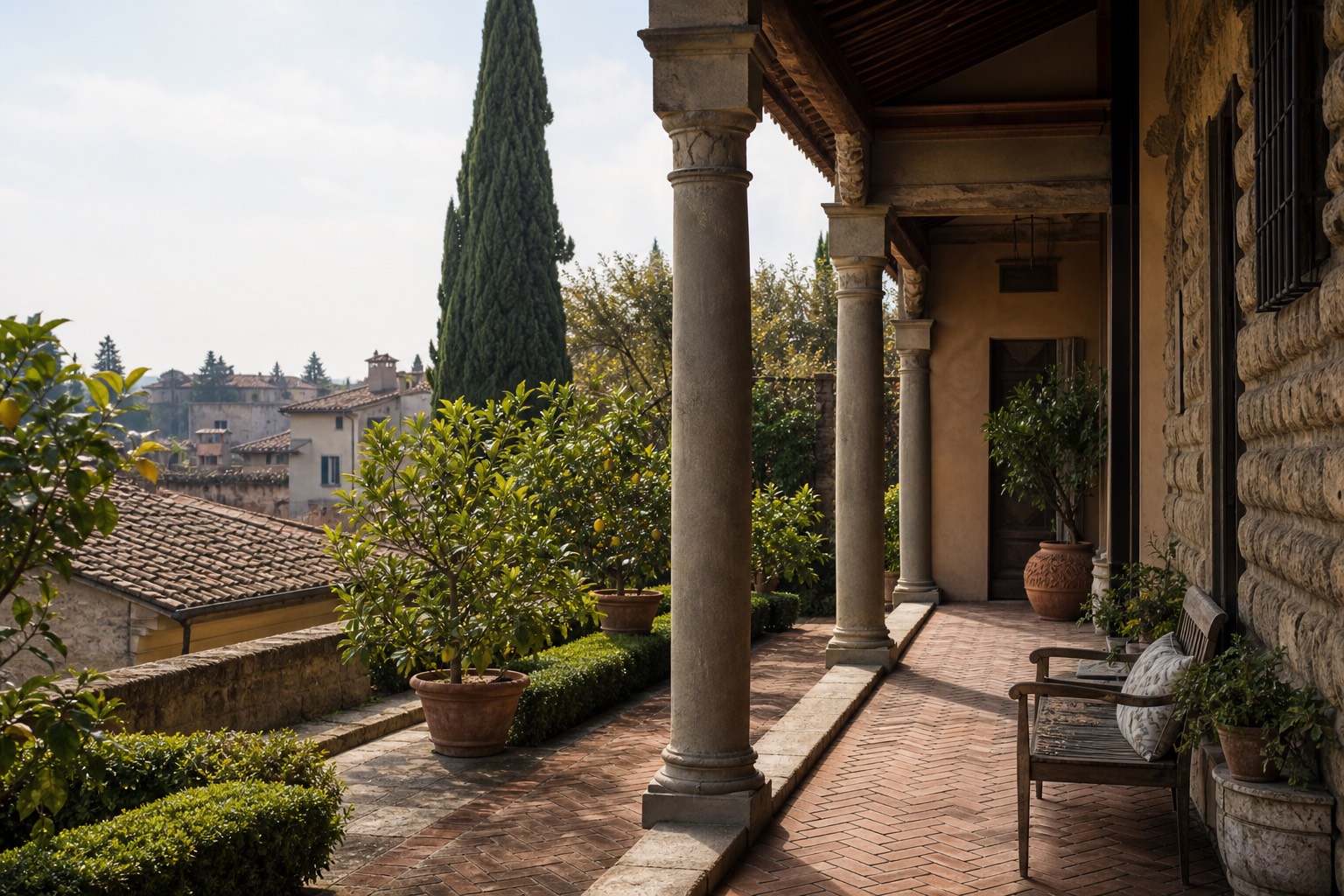
Benefits: views, greenery, villas, and quiet. Consider: car dependence; checks on slopes, retaining walls, drainage, and landslide risk; landscape permissions; and a different local government.
Quick comparison
Compare the main differences on one page.
| Factor | Historic center | Outer Florence | Nearby municipality / hills |
|---|---|---|---|
| Walking access | Usually strongest for center amenities | Varies; often local services plus transit | Local village access may be good; a trip into Florence can require a car or bus |
| Space and outdoor area | Scarcer and usually more expensive | More varied apartment choices | More villas and gardens may be available, with more maintenance |
| Car and parking | Restricted-driving zone, resident-permit, and garage limits | Often easier, but still depends on the address | Frequently more important |
| Schools | Public zoning and capacity; longer trip to some international campuses | Depends on address and school | Southern areas can suit some campuses; confirm admission first |
| Building checks | Historic structure, elevators, permissions, noise, roof and facade | Systems, condominium work, traffic, and indoor comfort | Slope, retaining walls, drainage, access, and landscape limits |
| Local services | Comune di Firenze | Separate local taxes, schools, permits, waste collection, and services | |
Transit and access
Use the network that exists—not the line on a future map.
Florence currently operates T1 from Scandicci through Santa Maria Novella to Careggi and T2 from the airport through the center to San Marco. The T2 central extension opened January 25, 2025. Future Bagno a Ripoli and Rovezzano projects should not be treated as operating service in a purchase decision.
Central access is also shaped by the ZTL, pedestrian areas, resident permits, deliveries, and garage availability. Verify the current rules for the precise address and vehicle; do not assume residency guarantees convenient parking.
Official sources: Comune di Firenze tram network, T1 details, ZTL permits, and pedestrian areas.
Price context
The center premium is visible, but the listing-site areas are broad.
For June 2026, idealista reported Centro at €5,590/m², Campo di Marte at €4,735, Gavinana–Galluzzo at €4,400, Isolotto–Legnaia at €3,829, and Rifredi at €3,796. Immobiliare.it reported Centro at €5,931, Oltrarno €6,253, Campo di Marte–Libertà €4,784, Isolotto €3,707, and Firenze Nord €3,742. These are advertised asking indicators with different area boundaries—not completed-sale averages.
Market sources: idealista and Immobiliare.it, June 2026. See how the Florence price figures are calculated.
Rental-use warning
Do not underwrite the purchase to a stable short-let rule.
Florence’s tourist-rental regulation took effect in 2025, while litigation and administrative developments continued in 2026. CIR/CIN, condominium, planning, authorization, tax, safety, and platform duties may apply. Verify the current legal position immediately before relying on rental income, and never treat a portal yield projection as guaranteed.
Current official starting points: Comune di Firenze tourist-rental information, regulation PDF, and May 2026 council-commission update.
Location FAQ
Choose what fits your life, not a universal ranking.
Is central Florence or outside better?
Neither is always better. Compare the center's access and the extra space outside it with your household’s school, work, mobility, noise, building, and budget needs.
Can we live without a car?
Often in central or tram-connected areas, but school, work, hills, accessibility, and weekend travel decide. Time the actual route.
Which areas cost less than the center?
Broad property-portal figures and OMI ranges generally place Isolotto, Legnaia, Rifredi, Novoli, and western zones below the center. A particular home can differ greatly from the broad area.
Do the hills suit international-school families?
They may shorten some south-campus trips, but check admissions, school transport, car dependence, slopes, drainage, and maintenance before choosing a home.
Location disclaimer
This guide does not rank, recommend, or label any neighborhood as best, safe, investable, or guaranteed to appreciate. Conditions vary at street and building level. Verify current transit, access, schools, noise, hazards, planning, taxes, and property facts independently.
Design the week, then choose the address.
NOTICE coordinates housing, schools, moving, immigration, tax-adviser, and daily-life planning for U.S. households.
Plan your move ↗